How to Tell if Your Indian River Roof Has a Problem — And What the Signs Actually Mean
How to Tell if Your Indian River Roof Has a Problem — And What the Signs Actually Mean
Most Indian River homeowners do not spend much time thinking about their roof until something forces the conversation. A water stain shows up on the bedroom ceiling. A shingle lands in the backyard after a storm. A neighbor mentions they just had their roof replaced and now you are wondering when yours was last looked at. These are all reasonable triggers. But by the time any of those things happen, the underlying problem has usually been developing for a while.
Indian River sits in Cheboygan County in Northern Michigan, where the roofing environment is genuinely demanding. The proximity to Burt Lake and Mullett Lake creates local humidity conditions that accelerate the biological growth that degrades shingle surfaces. Winter snowfall and freeze-thaw cycles stress every component from ridge to eave. And the storm season that runs spring through fall delivers wind and occasional hail that leaves marks homeowners miss because they are not sure what to look for.
This is a guide to reading what your roof is telling you, what the common warning signs actually mean, and when a professional inspection is the right next step versus when monitoring is sufficient.
What You Can See From the Ground
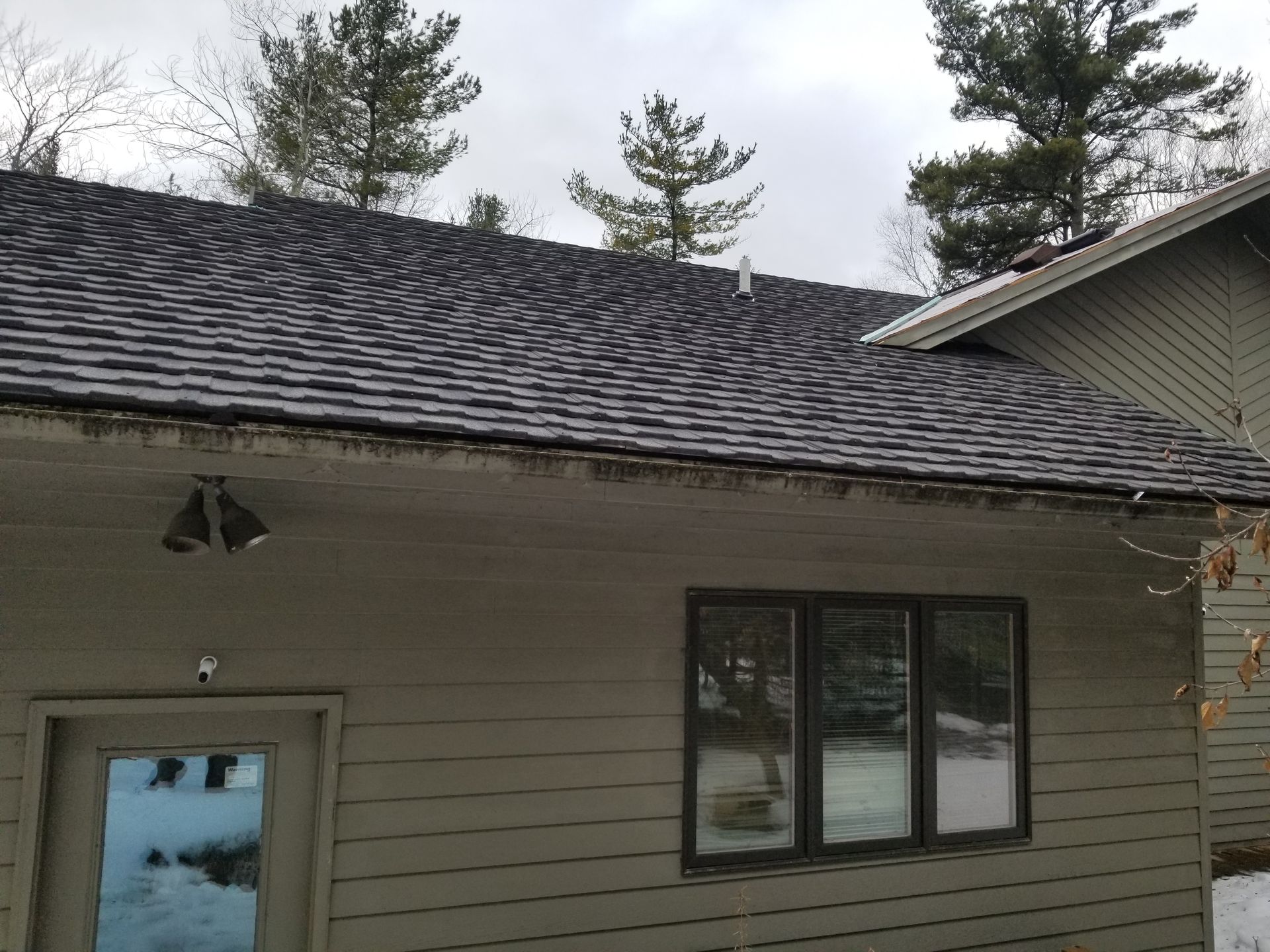
Start from the driveway and look at the whole roof surface in good light. You are looking for several things. Missing shingles are the obvious one, but also look for shingles that appear to be lifting at the edges or corners, sections where the color is noticeably different from the surrounding field, and any areas where the roof line sags or appears uneven.
Dark streaking running down the slope is algae growth, common on roofs in humid environments near water. Burt Lake and Mullett Lake create exactly the moisture conditions that feed it. Algae streaking is primarily a cosmetic issue in its early stages but accelerates shingle degradation over time if left untreated.
Moss growth is more serious. Moss holds moisture against the shingle surface and works its way under shingle edges, lifting them and allowing water infiltration. A roof with active moss growth near Indian River is one where moisture is sitting on the surface longer than it should, and the shingles in affected areas are aging faster than the rest of the roof.
Check the gutters while you are at it. Significant granule accumulation in the gutter channel or at the downspout discharge point is a meaningful signal. Granules protect the asphalt surface from UV degradation. When they are coming off in volume, the shingles losing them are aging rapidly. That is not a reason to panic but it is a reason to get an inspection scheduled.
What You Can See From the Attic
Pull down the attic hatch and look around with a flashlight. Daylight visible through the decking anywhere is an active problem. Staining on the decking or rafters, dark spots or discoloration that follows a water path, indicates moisture has been getting in at some point. Whether it is an active ongoing leak or historic damage that has since dried matters, and a professional can help you read the difference.
Check the insulation at the eave areas. In Northern Michigan homes, insulation that has shifted away from the soffit area blocks the intake ventilation that the roof depends on to prevent ice dam formation and manage attic moisture year-round. If the insulation is blocking the soffits, that is a ventilation problem worth addressing.
If the attic feels notably warmer than outside air temperature in cold weather, or if there is frost accumulation on the decking or framing in winter, those are signs of inadequate ventilation that will produce ice dams and accelerated shingle aging if not corrected.
What Happens After a Storm
After any significant wind or hail event in the Indian River area, the roof warrants a closer look than a ground-level visual. Wind damage to asphalt shingles often does not produce missing shingles. What it does is lift shingles at the tab edges and break the factory adhesive seal between courses. A shingle that has been lifted and re-seated by wind is no longer bonded. The next storm lifts it further. That progression is not visible from the ground.
Hail damage is even less obvious from below. Impact bruising on the shingle surface, where granules have been displaced, looks like nothing from the driveway. On close inspection from the roof, the pattern of impact sites across the slope surface tells the damage story clearly. If your area had a storm with confirmed hail reports, a professional inspection is worth scheduling regardless of whether anything looks wrong from below.
When to Call a Professional vs. When to Monitor
Monitor, do not panic, when you see: minor algae streaking with no other symptoms, a single missing shingle on a roof that is otherwise in good condition and less than 15 years old, or granule accumulation in gutters that is modest and not accelerating. These warrant scheduling an inspection at your next reasonable opportunity, not an emergency call.
Call sooner when you see: active water entry inside the home, moss growth that is lifting shingle edges, multiple missing shingles or a shingle section that has blown away, visible sagging in the roof line, daylight through the attic decking, or dark staining in the attic that appears recent and wet. These are situations where delay increases both the damage and the repair cost.
Call immediately for: any active leak during a storm, significant sections of roof loss after a wind event, or visible structural damage. Alpine Brothers offers 24/7 emergency service for Indian River homeowners who cannot wait for a scheduled appointment.
What a Professional Residential Roofing Inspection Covers in Indian River
Alpine Brothers provides residential roofing inspections for homeowners throughout Cheboygan County including Indian River. The inspection covers the full shingle surface on every slope, all flashing at penetrations and transitions, ridge cap and hip ends, gutter attachment and drainage, fascia and soffit condition, and the attic space for moisture indicators and ventilation assessment.
The inspection produces a clear, documented picture of current conditions: what is performing correctly, what needs attention now, and what can be monitored. If repairs are needed, the scope and cost are outlined before any commitment is made. If the roof is approaching end of life, the replacement conversation happens with full information rather than under pressure.
Why Indian River Homeowners Choose Alpine Brothers
Alpine Brothers is owner-operated out of Gaylord, which puts them squarely in the Northern Michigan market they serve. Eric and Brandon are on every project. The company installs materials from Atlas, CertainTeed, and Brava, all products with proven performance in the Northern Michigan climate. BBB accredited with an Atlas PRO+ Gold Level certification. Financing through Hearth is available for homeowners managing larger repair or replacement costs. Free estimates are standard, with no pressure to commit on the spot.
Schedule a Free Residential Roofing Inspection in Indian River
If something about your roof is bothering you and you are not sure what it means, the inspection is the right starting point. Contact Alpine Brothers to schedule a free residential roofing inspection in Indian River. Call (989) 619-9484 to speak directly with Eric or Brandon.
Frequently Asked Questions From Indian River Homeowners About Roof Problems
How do I know if the granules in my gutter are a serious problem?
Some granule loss is normal on aging asphalt shingles. Significant accumulation, meaning visible piles at the downspout or a thick layer lining the gutter channel, indicates shingles that are losing surface protection at an accelerated rate. On a roof over 15 years old with heavy granule loss, a professional inspection to assess remaining service life is the right next step rather than waiting for a more obvious failure
Is moss on my roof in Indian River something to worry about?
Yes. Moss holds moisture against the shingle surface and works its way under shingle edges, lifting them over time. The humid conditions near Burt Lake and Mullett Lake create ideal moss growth conditions. Moss on a roof that is otherwise in decent condition can be treated, but the treatment should be done correctly to avoid shingle damage. Active moss lifting shingle edges requires professional assessment.
Can I tell from inside my home if my roof is leaking?
Water staining on ceilings or walls near exterior surfaces, peeling paint on interior walls adjacent to the exterior, and musty odors in upper floor rooms or the attic are common interior indicators of roof infiltration. The entry point is often not directly above where the stain appears, as water follows structural paths before dripping. A professional inspection locates the actual source.
How long should a residential roof last in Northern Michigan?
Properly installed architectural asphalt shingles typically last 20 to 30 years in Northern Michigan conditions. Actual lifespan depends on installation quality, attic ventilation, maintenance history, and how much severe weather the roof has absorbed. Roofs in the Indian River area that have dealt with significant ice dam cycles or repeated storm damage may reach end of life earlier than the rated term suggests.
Does Alpine Brothers serve Indian River and Cheboygan County?
Yes. Alpine Brothers serves Indian River, Cheboygan, and surrounding Cheboygan County communities as part of its Northern Michigan service area. The team also serves Petoskey, Harbor Springs, Mount Pleasant, and communities throughout the Eastern Upper Peninsula.
What should I do immediately if my roof starts leaking during a storm?
Contain the interior damage first. Place buckets under active drips and protect flooring and belongings. Do not attempt to access the roof during active storm conditions. Call Alpine Brothers at (989) 619-9484. Emergency service is available 24/7. Tarping can protect the affected area until proper repair conditions allow permanent work to be completed safely
You might also like
Spring Storms and Roof Damage: Signs You Need an Inspection