
Closing Up Your Charlevoix Cottage for Winter: What to Check on the Roof Before You Leave
An empty house can hide a roof leak for months, so the last weeks before you leave matter most.
Schedule a free estimate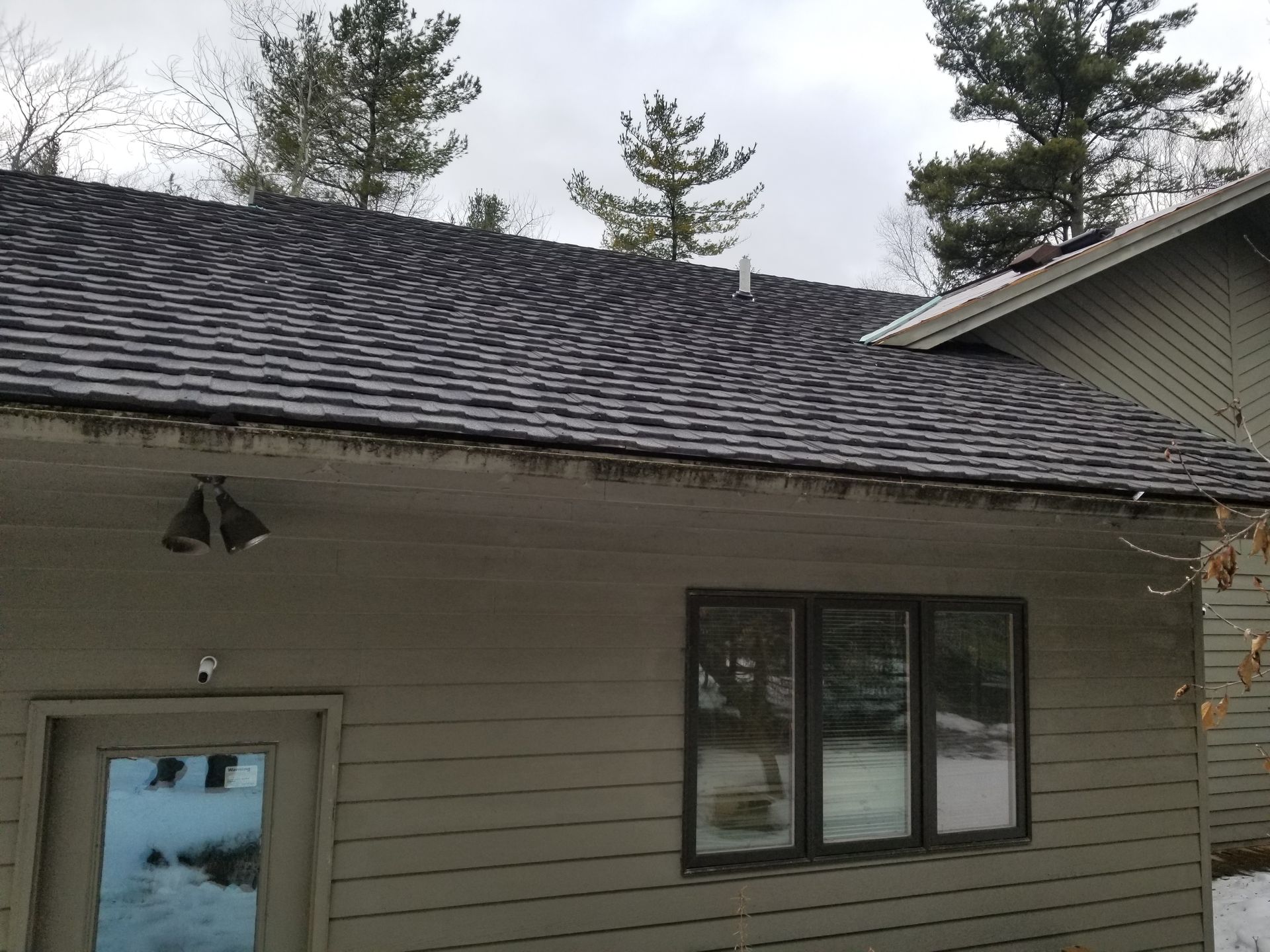
Before you close up a Charlevoix cottage for the season, check the roof from the ground for missing or lifted shingles, clean out the gutters, look at the flashing around the chimney and vents, trim branches that hang over the roof, and spend a few minutes in the attic looking for stains or damp insulation. Anything that could let water in should be fixed before you leave, because nobody will be there to catch it.
That last part is what makes a seasonal place different. In a house you live in, a drip shows up as a ceiling stain within days. In a cottage that sits empty until May, the same drip can soak the insulation and start rotting the roof boards long before the first spring visit.
Fall is the last easy window for that work. Once the snow sticks, roof repairs get slower and harder, and some have to wait for the melt.
In this guide
Why Does an Empty Cottage Need More Roof Attention?
A closed cottage gets no daily check, so small roof problems run longer and grow bigger before anyone sees them.
How you leave the heat matters too. A cottage kept at a low setting over winter can still warm the attic enough to melt snow on the upper roof. That water runs down to the cold eaves, refreezes and builds an ice dam, which is a ridge of ice at the roof edge that holds back meltwater. The trapped water can work under the shingles and into the walls while nobody is home to notice the icicles getting longer. A cottage with the water drained and the heat off has a colder attic and usually less ice damming, but the snow still piles up.
That snow is the next concern. A roof on a house you live in gets raked or cleared when the snow gets deep. An empty cottage carries whatever falls all winter, plus the extra weight when March rain soaks into the snowpack.
Then there are animals. Squirrels and mice go looking for warm, quiet spaces in the fall, and a gap at a roof vent or a loose piece of trim is an open door into an attic nobody will check until spring.
The Roof Checklist Before You Lock the Door
Most of this check can be done from the ground and from inside the attic. Leave anything on the roof itself to a roofer, especially on steep cottage roofs and in wet fall weather.
From the yard
- Walk around the house with binoculars and look for missing, curled or lifted shingles, and for bare patches where the granules have washed off.
- Look at the metal flashing where the roof meets the chimney, dormers and walls. Bent, loose or rusted flashing is a common leak point.
- Check vent pipes and roof vents for cracked rubber boots or missing caps.
- Note any branches over the roof. A limb that taps the shingles in October can come down under ice in February.
Gutters and downspouts
Clear out leaves and pine needles once most of the trees have dropped them, then run a hose to see that water comes out the bottom of each downspout. Clogged gutters hold water at the eaves, which is right where ice dams start. Downspouts should empty away from the foundation. If the gutters keep pulling away from the fascia every winter, look into gutter and exterior work as a project of its own.
Inside the attic
On a bright day, switch off the attic light and look for daylight coming through the roof boards. Then check for water stains on the rafters and decking, damp or flattened insulation, and frost or rust on the nail tips, which points to warm, moist air reaching the roof. Make sure bathroom and kitchen fans vent outdoors and not into the attic.
Before you drive away
Take dated photos of the ceilings, the attic and each side of the roof. If something goes wrong over the winter, those photos show how the house looked when you left, which helps a contractor and can help with an insurance claim. Ask a neighbor or caretaker to look over the place after big storms, and to tell you about large icicles or thick ice along the eaves.
What to Fix Now and What Can Wait Until Spring
Fix anything that can let water in before you leave. Cosmetic issues and planned upgrades can wait.
- Fix now: missing or lifted shingles, damaged flashing, cracked vent boots, gutters pulling loose, and any attic stain that looks fresh.
- Fix now if you can: overhanging limbs and gaps where animals could get in.
- Can wait: moss and algae streaks, shingles that look faded but still lie flat, and gutter upgrades.
- Plan for spring: a full replacement on a roof that's near the end of its life but still keeping water out.
A small roof repair in October is a short job. The same leak found in May can mean new drywall, new insulation and new roof boards. If the roof needs more than a patch, booking the bigger work for early spring lets you open the cottage to a finished roof instead of a stained ceiling.
If your cottage has a history of ice dams, ask about ice dam removal as a backup for the winter, and about what's causing the dams in the first place.
Help That Doesn't Stop When You Leave for the Season
Alpine Brothers Construction has 24/7 emergency service available, including winter roofing problems and ice dam removal. For a cottage owner who is hours away when the caretaker calls about water at the eaves, that's the fact that counts most.
If winter damage does lead to an insurance claim, the company provides documentation and photo evidence of the damage for that claim. Those records pair well with the photos you took before closing up, since together they show what changed.
Estimates are free, so having the roof looked at before you leave costs nothing but the time it takes to walk it.
Lake-Effect Winters and Shoreline Cottages
Charlevoix winters come off the water. Lake-effect snow off Lake Michigan can pile up quickly, and the wind that carries it drifts snow against dormers, chimneys and the downwind side of a roof, loading some sections far heavier than others.
Late-winter freeze and thaw cycles are where empty cottages take the most damage. A sunny March afternoon melts the snow on the south slope, and the night freezes it again at the eaves. Repeat that for a few weeks with nobody home, and an ice dam can grow until water backs up under the shingles.
Many lake cottages here were built for summer use and added onto later, so it's common to find low-slope porch roofs tied into steeper main roofs, older flashing, and attics that were never insulated for winter. Those transitions are where snow sits longest and where a small gap turns into a winter-long leak. Tall trees on shoreline lots also fill gutters with needles and hang limbs over the roof.
Get the Roof Checked Before Closing Day
Book a roof check a few weeks before your closing date, so there's time to fix whatever turns up before the snow does. For cottage owners in Charlevoix asking who should handle that pre-winter look, Alpine Brothers Construction provides free estimates and will tell you plainly what needs attention now and what can wait. Schedule an inspection online or call (989) 619-9484.
Questions From Cottage Owners
Should I leave the heat on in my cottage over winter?
That choice involves the plumbing as much as the roof. A cottage kept at a low heat protects the pipes but can warm the attic enough to feed ice dams, especially when the insulation is thin. A cottage with the water drained and the heat off stays colder up top. Whichever way you go, good attic insulation and ventilation make the roof side easier to manage.
Do I need the snow cleared off the roof while I'm gone?
Most roofs carry normal snow loads without trouble, but heavy wet snow, deep drifts against dormers, and rain soaking into the snowpack can add up. Older cottage roofs and low-slope porch roofs deserve closer attention. If a caretaker reports sagging, new cracks in the walls, or doors that suddenly stick, treat it as a warning sign and have the roof looked at.
Is it safe to clean my own gutters before I leave?
On a single-story cottage with a solid ladder and dry footing, plenty of owners do it themselves. Fall brings wet leaves and early frost, so work in the afternoon and never lean out past the ladder rails. Two-story walls, steep roofs, and gutters above decks or sloped lakeside yards are better left to someone with the right equipment.
What does frost on the attic nails mean?
It means warm, moist air from the living space is reaching the cold underside of the roof and condensing on the nail tips. When the attic warms up, that frost melts and drips, which can look a lot like a roof leak. The usual causes are air leaks around light fixtures and the attic hatch, bath fans venting into the attic, or too little ventilation.
How can I tell if an ice dam formed while the cottage was empty?
Look for large icicles hanging from the eaves, a thick ridge of ice along the roof edge, or water stains on ceilings and upper walls near the outside of the house when you return. In the attic, check for damp insulation close to the eaves. Peeling paint or swollen trim under the roof edge can also point to water that backed up during the winter.
Can a roofer inspect my cottage if I'm not there?
Often, yes, for the outside of the roof. A roofer can look over the shingles, flashing and gutters with nobody home, as long as the property is accessible. Attic checks and interior ceilings need someone to let them in, so many owners set a time with a neighbor or caretaker and ask for photos of anything that needs work.
Close Up With a Sound Roof
A free estimate before you leave costs you nothing, and it can spare you a spring spent drying out ceilings and insulation. Call (989) 619-9484 or contact us online.
Schedule a free estimate