
Can You Replace a Roof in a Northern Michigan Winter? What Charlevoix Homeowners Should Know About Cold-Weather Installation
Winter roof work is possible up north, but the cold changes how materials behave and what to ask before anyone tears off your roof.
Schedule a free estimate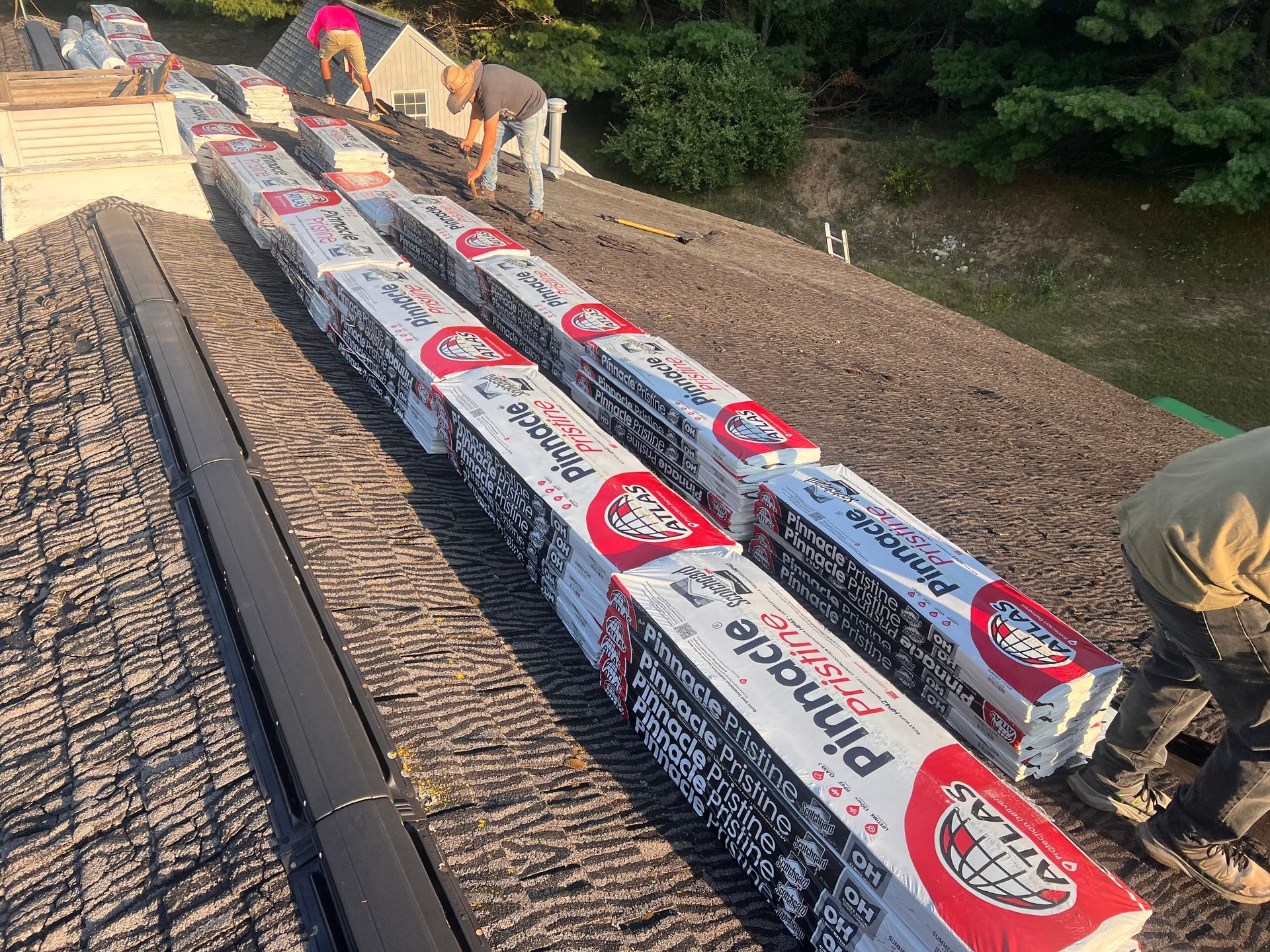
Yes, you can replace a roof in a Northern Michigan winter. It takes more planning than a summer job, because cold shingles, snow on the deck and short daylight change how the work goes, and some roofs are better off waiting for spring.
The real question for most Charlevoix homeowners is whether their roof can wait. A roof that's leaking into a bedroom or sagging under snow usually can't. A tired roof that's still keeping water out often can, and a spring roof replacement gives new shingles a warm season to seal down.
Waiting has a cost too. Every freeze and thaw works on a roof that's already weak, and a slow winter leak can soak the attic insulation long before a stain shows up on the ceiling.
In this guide
What Changes When a Roof Goes On in the Cold
Cold weather mostly changes how roofing materials behave and how much roof a crew can safely open in a single day.
Shingles stiffen and seal slowly
Asphalt shingles have a strip of sealant on the back that softens in the sun and bonds each shingle to the one below it. In freezing weather that strip may not bond until spring warms the roof. Until it does, the shingles are held by their nails alone, so a strong wind can lift tabs that would normally be locked down. Many manufacturers call for hand sealing with roofing cement in cold conditions, and a careful installer follows the printed instructions for the product going on your house.
Cold shingles also get stiff. Bend one over a ridge or into a valley on a bitter morning and it can crack. Crews keep bundles somewhere warmer until they're needed and slow down on cuts and bends.
Underlayment needs a clean, dry deck
Ice and water shield is a sticky membrane that goes along the eaves and in the valleys to stop water that backs up behind ice. It grips best on dry, warm boards. In winter the crew has to clear snow and frost off the deck before it goes down, and some products list minimum application temperatures, so the membrane takes extra care to stay put.
Short days set the pace
December daylight runs out fast up here. A good winter crew tears off only what it can dry in before dark, meaning covered with underlayment and sealed against the weather. That can stretch a job across more days than the same roof would take in July, which is normal.
Should You Replace the Roof Now or Wait for Spring?
Replace now if water is getting in and repairs aren't holding. Wait if the roof is old but still dry. In practice, most roofs fall into one of these groups:
- Go ahead this winter: leaks in more than one spot, soft or rotted roof boards you can see from the attic, storm damage that left part of the roof open, or a home sale that can't be pushed back.
- Patch it and wait: one leak with a clear cause, a few shingles missing after a windstorm, or worn but flat shingles on a roof that's simply near the end of its life.
- Get it looked at either way: ceiling stains that grow after every thaw, ice dams that come back each year, or daylight showing through the roof boards.
A temporary roof repair can carry a sound roof through to spring. A patch on a roof failing in several places usually just moves the leak. If the boards underneath are already soft, putting another winter of snow on them is a bad bet.
Questions to Ask Before a Winter Tear-Off
A winter estimate should explain how the crew plans to deal with the cold, not only what the roof will cost. Ask these before you sign:
- How will you clear snow and ice off the roof, and where will it go?
- How much of the roof will you open each day, and how is it covered overnight?
- Where will the shingles be stored before they go up?
- Will you hand seal the shingles or follow other cold-weather steps the manufacturer lists?
- What happens if a squall rolls in halfway through a section?
- How will you find stray nails in snow-covered flowerbeds and the driveway?
- What workmanship warranty do you put in writing, separate from the manufacturer's?
A contractor who has already thought about snow removal and nightly dry-in has done winter work before. One who shrugs at the weather questions may be filling a slow season without a real plan for it.
Ask who will be on site, too. Small calls come up all day on a winter job, like whether to stop early ahead of a snow band, and it helps when the person making them answers for the finished roof.
Does the Roofing Material Make a Difference in Winter?
Yes. Some roofing systems handle a cold install better than others, and that can shape both your timing and your choice.
Architectural shingles are the most common choice on homes in this part of the state, and they can go on in winter with the extra care described above. The main tradeoff is the sealing delay, so a roof installed in January may not be fully bonded until the weather warms up.
Standing seam metal panels lock together mechanically, so they don't rely on a heat-activated seal. That makes them less fussy in the cold, though the underlayment beneath them still needs a dry deck. Metal also sheds snow, so plan where it will land, away from doors, decks and walkways.
Synthetic shake follows its maker's installation instructions, and the installer should check what those say about cold weather before booking a winter job.
If you're still choosing a material, compare the residential roofing options now, before the season makes the choice for you.
Why Owner Oversight Matters on a Cold-Weather Roof
Alpine Brothers Construction is run by brothers Brandon and Eric Nowak, and one of the owners oversees and is present on every project. On a winter tear-off, that means the person deciding whether to open one more section late in the afternoon is an owner who has to stand behind the result.
The company holds Atlas PRO Gold and CertainTeed Shingle Master certifications. Those come from the shingle makers, and following their printed installation steps, cold-weather details included, is how a winter shingle job should be done.
Every roof also carries a 2-year Alpine Brothers workmanship warranty on top of the standard manufacturer warranties. On a cold-weather install, the labor is where most of the risk sits, and that warranty covers the workmanship.
How Lakeshore Weather Shapes a Winter Roof Job
Charlevoix sits on a narrow strip of land between Lake Michigan and Lake Charlevoix, so winter weather reaches it off open water from more than one side.
Lake-effect snow can stack up fast, and wind off Lake Michigan drives it into drifts against dormers and the uphill side of chimneys. For a roof replacement, that means more snow to clear before work starts and fewer calm days to work in. A crew that watches the marine forecast, not only the town forecast, tends to pick better days.
The houses add their own wrinkles. Older cottages and lake homes often have steep roofs, dormers and additions built over several decades, sometimes with more than one layer of old shingles underneath. Each of those adds tear-off time and flashing work, and both push a winter crew to open the roof in smaller sections.
Getting a Winter Roof Replacement on the Calendar
Start with an inspection before you settle on timing. If you're weighing a winter replacement in Charlevoix, Alpine Brothers Construction will walk the roof with you, explain what has to happen now and what can wait, and put a free estimate in writing. Call (989) 619-9484 or request an estimate online.
Winter Roof Replacement Questions
Will new shingles blow off before they seal in the spring?
Properly nailed shingles should stay on through the winter, but their tabs are more exposed to wind until the sealant strip bonds. That's why cold-weather hand sealing, done where the manufacturer calls for it, matters most on exposed edges like rakes and ridges. If you spot a lifted tab after a storm, have it checked instead of waiting for warm weather to fix it on its own.
Does a winter roof replacement cost more?
It can, because snow removal, extra time spent drying in each section, and slower handling of cold materials all add labor. Some contractors build that into the estimate, and others price winter and summer work the same way. Ask how weather days are handled in the contract, so you know ahead of time whether a stretch of storms changes anything on your end.
Can a new roof go right over the old shingles in winter?
Laying new shingles over an old layer skips the tear-off, but it also hides the deck, which is often where winter damage shows up first. Many older homes already have more than one layer, and local building rules often limit how many layers a roof can carry. A full tear-off lets the crew find soft boards and replace them before new material goes down.
Do I need to be home while the roof is being replaced?
Not usually, though someone should be reachable during the day. The crew may need attic access, a spot for the dumpster, and a cleared path through a snowy yard for materials. If the house is a seasonal place that sits empty, agree ahead of time on how you will get photos and updates as each section of the roof is finished.
Should I add attic insulation while the roof is off?
It's worth asking about. Ice dams form when heat from the house melts snow on the upper roof and the water refreezes at the cold eaves, so insulation and ventilation play a big part. Insulation is usually added from inside the attic, but a replacement is a good time to check the vents, since ridge and soffit venting work together with the new roof.
How long does a winter roof replacement take?
There isn't one answer. Roof size, pitch, the number of old layers and the weather all play a part, and winter jobs usually run longer than the same roof in summer because crews open less of it each day. A careful contractor will lay out a plan section by section and tell you up front that storm days can push the schedule back.
Talk Through Your Winter Roof Options
Tell us what the roof is doing and how long it has been doing it, and we will give you a straight answer on timing. Call (989) 619-9484 or contact us online.
Schedule a free estimate